Over ten years ago, I was fortunate enough to work alongside Chris Wilkinson in the delivery of the Oxford Maggie’s Centre; a project that was extremely close to his heart, and one that truly encapsulates his architectural vision. Maggie’s is an extraordinary cancer charity that provides emotional and practical support to anyone living with the disease, commissioning stimulating and uplifting spaces - or ‘Centres’ - in which this care is provided. Each Maggie’s Centre is unique, designed in collaboration with recognised architects to create environments that Maggie Keswick Jencks hoped would help people ‘not to lose the joy of living in the fear of dying’.
In 2006, Chris was invited to develop a design for their Oxford Centre, sitting in the densely wooded boundary of the Churchill Hospital site. With the opening of the V&A Dundee exhibition Maggie’s Centres: Architecture that Cares marking 30 years of the charity, it seems the perfect time to reflect on this special project and what it means to design with such a focused, delicate brief.
The Approach
The question at the outset was clear: how do you design a place that feels as comfortable as possible? Our design direction was thus to create a warm and welcoming domestic setting rather than an impressive or striking piece of architecture; a modest, soothing space rather than a showpiece.
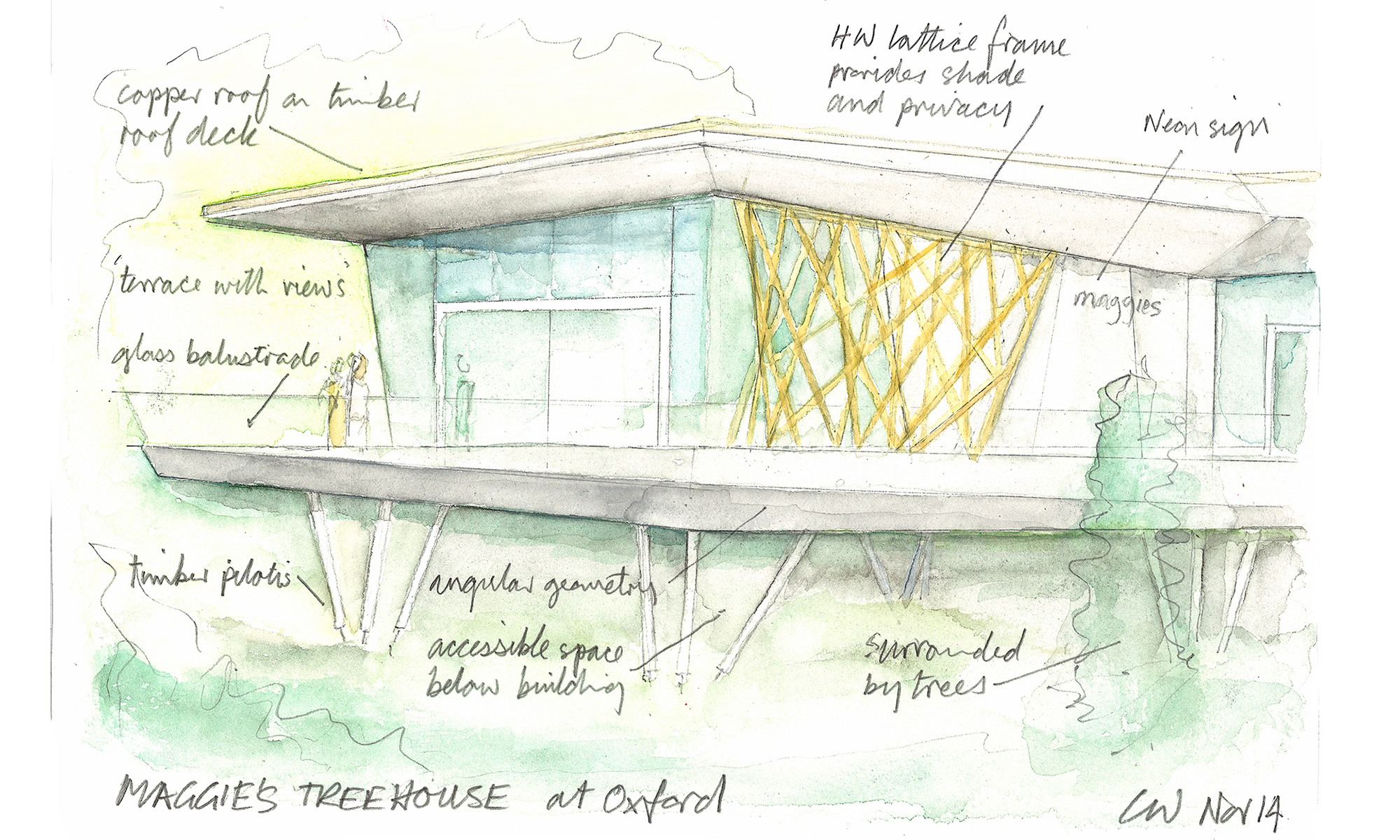
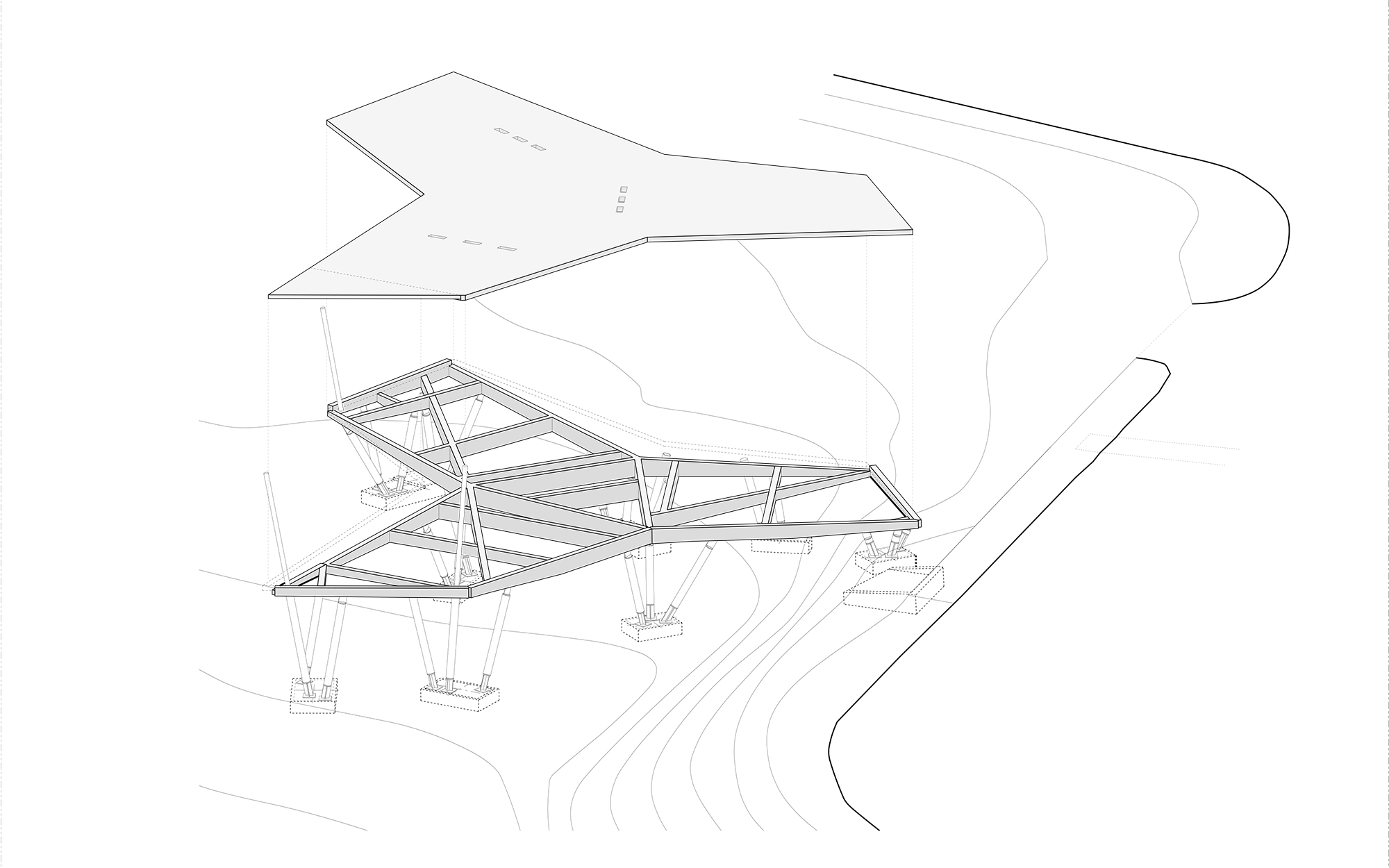
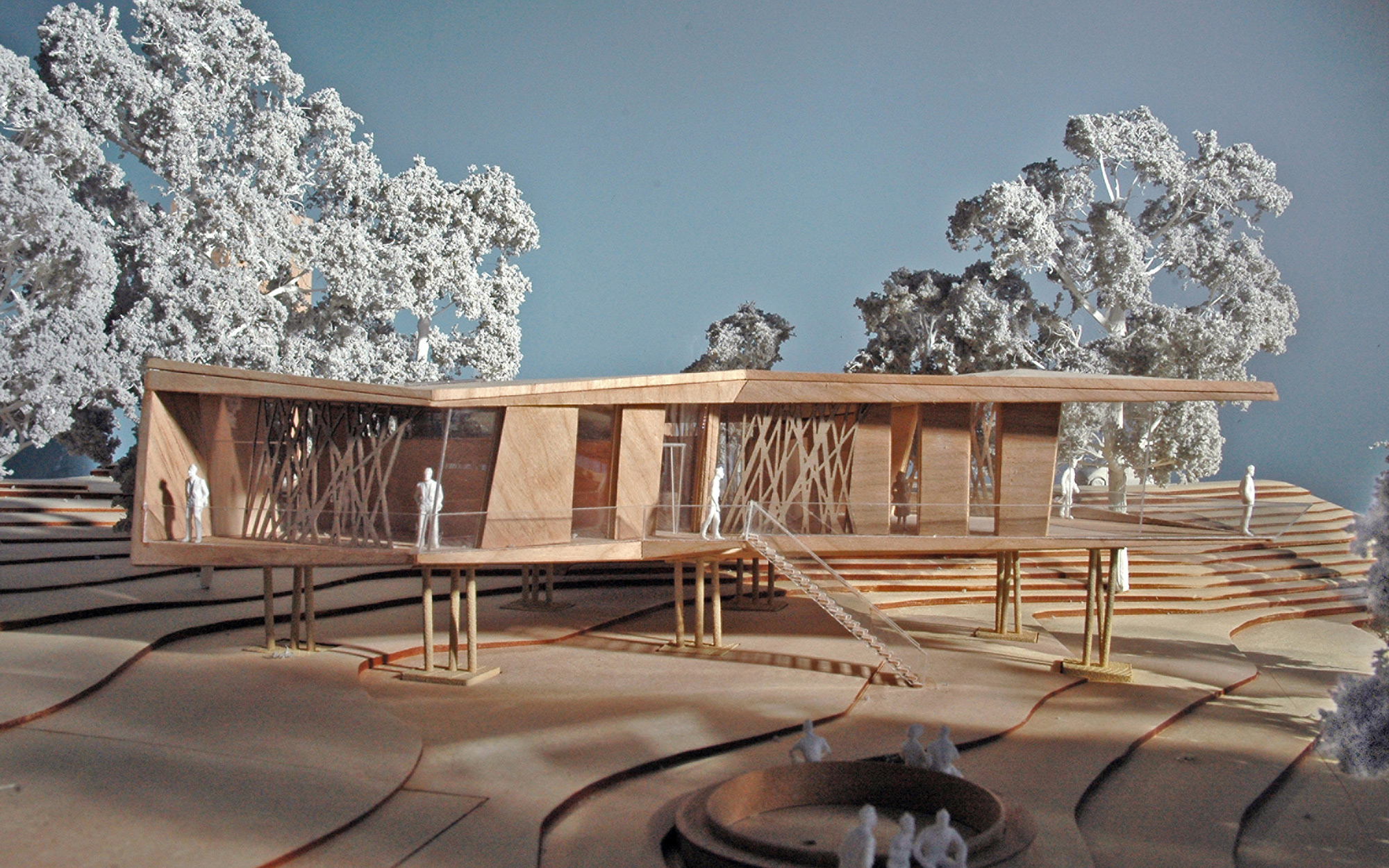
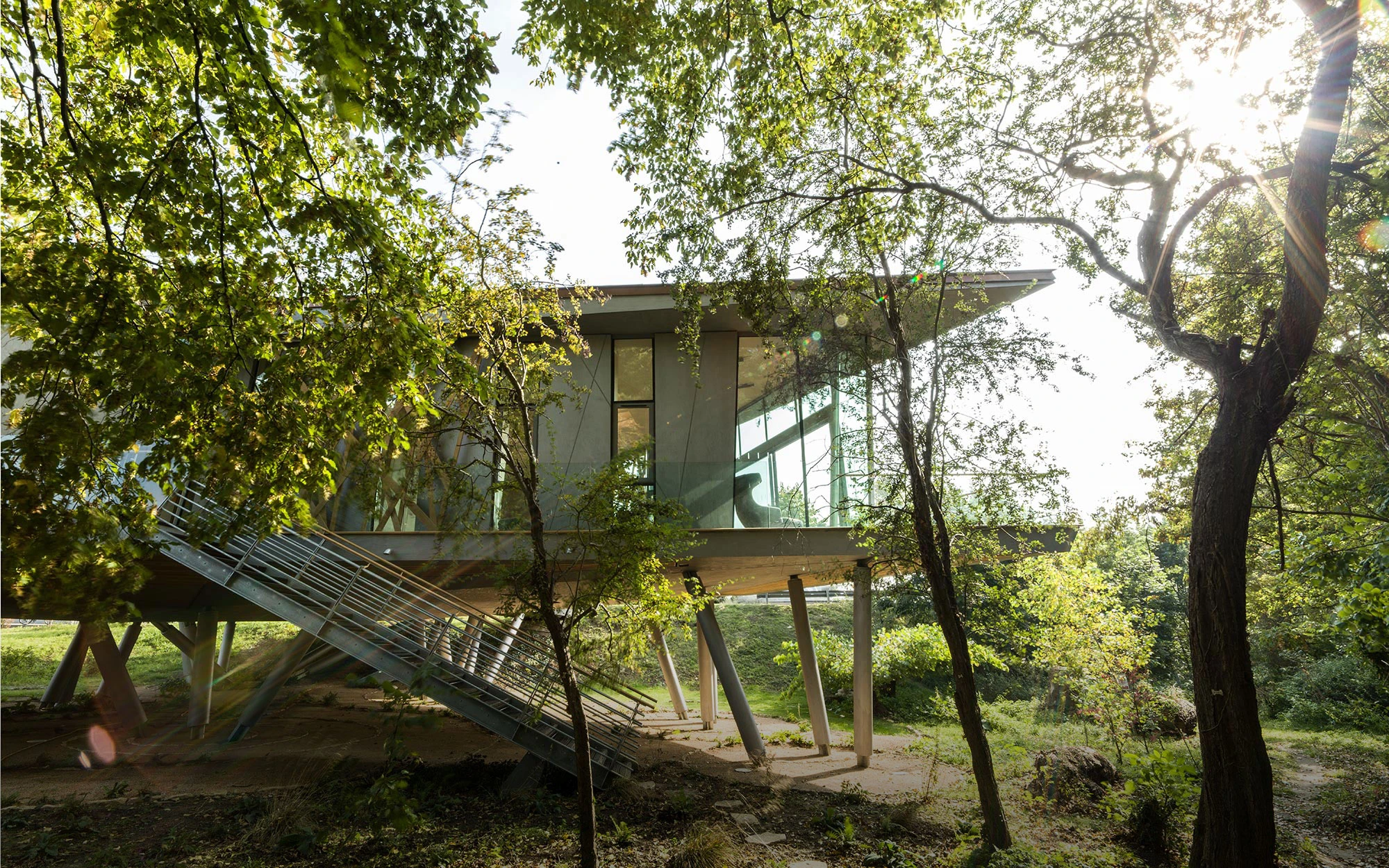
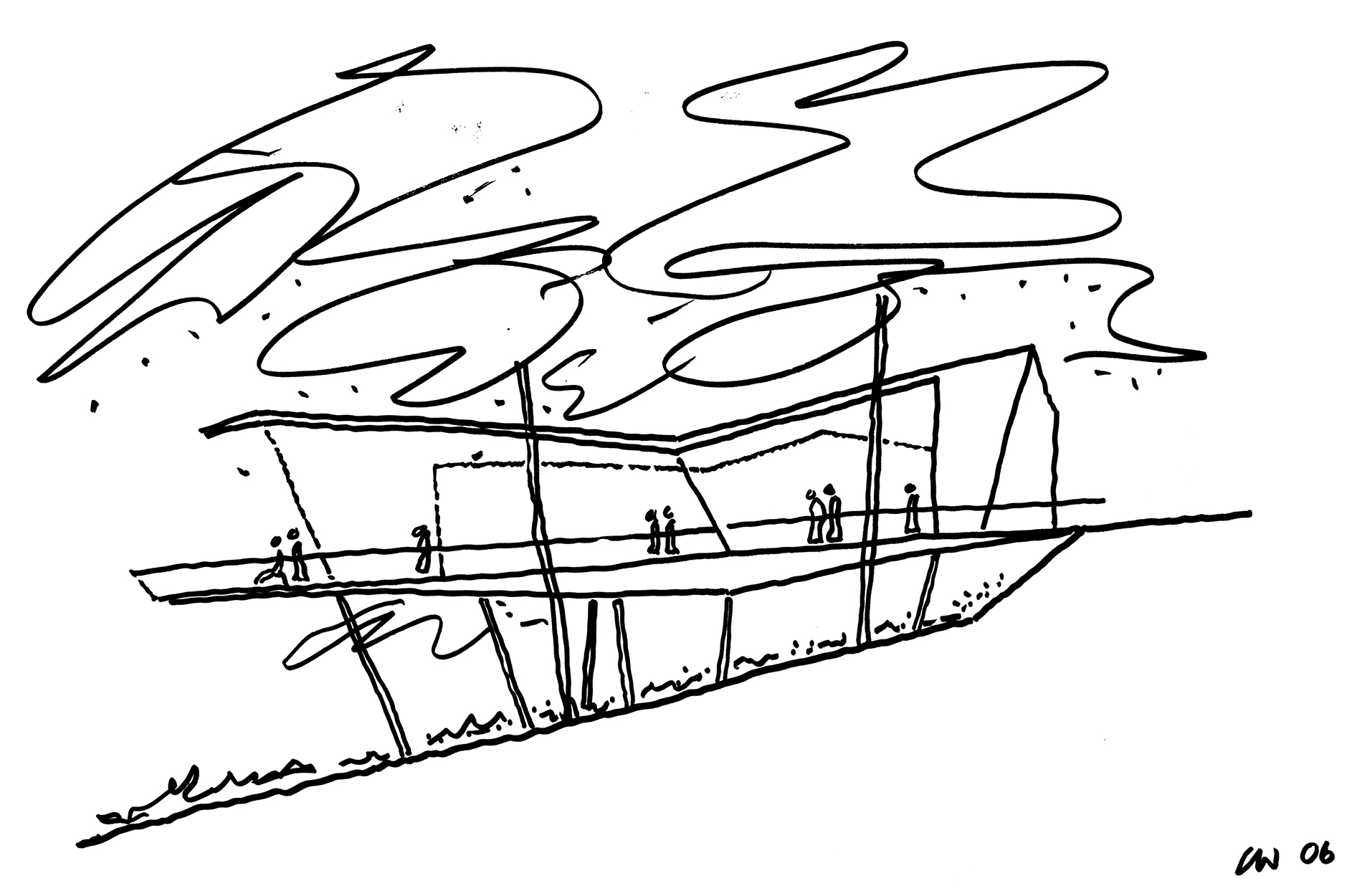
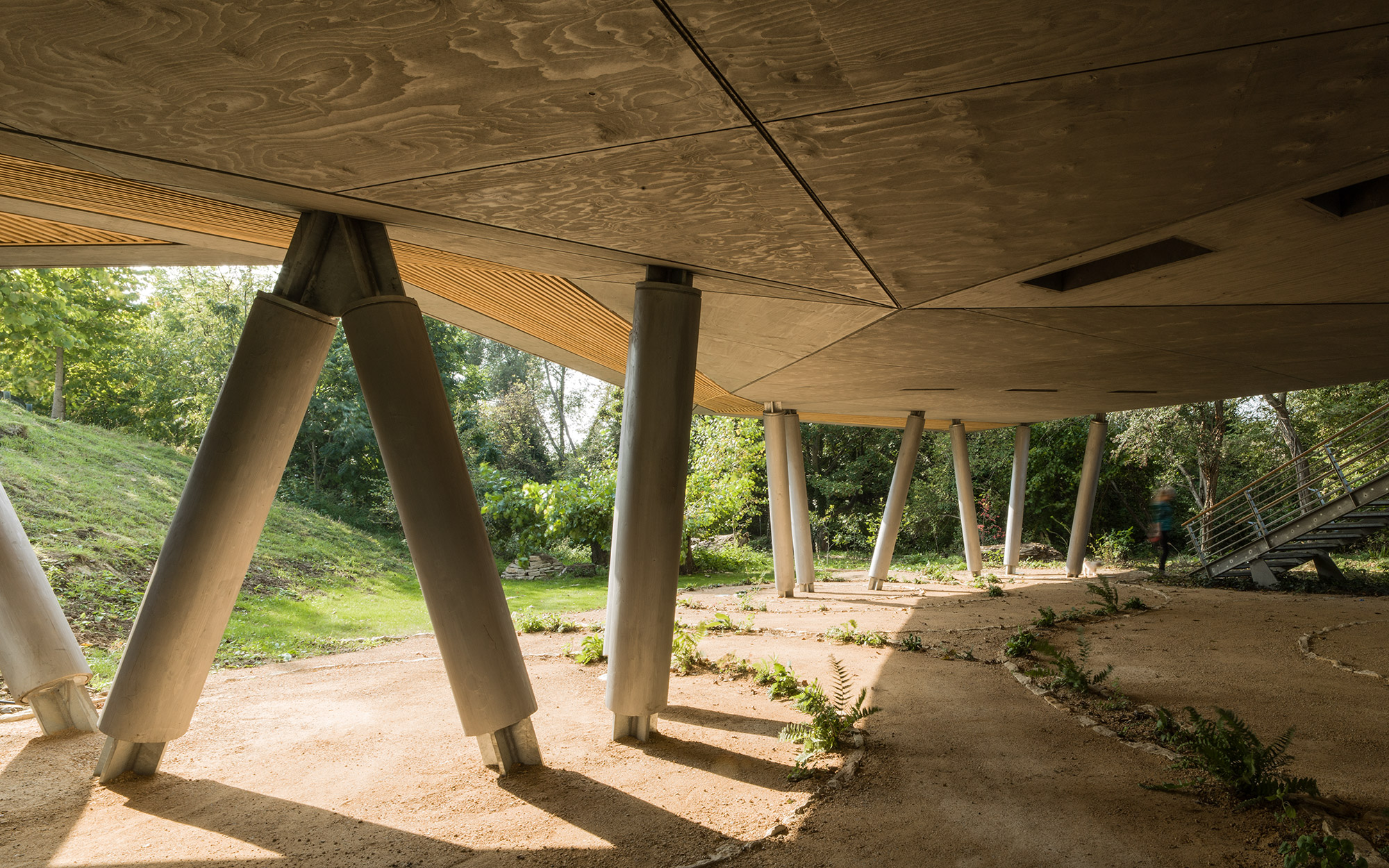
Maggie’s Centres are typically located in beautiful landscapes, close to hospitals yet intentionally contrasting their clinical and often stressful environment. The Oxford site was densely wooded and sloped, and so the challenge was introducing a building without eroding the tranquillity of the woodland. The solution was to design the building as a treehouse elevated on stilts, the small diameter of which allowed for minimal impact points in the ground.
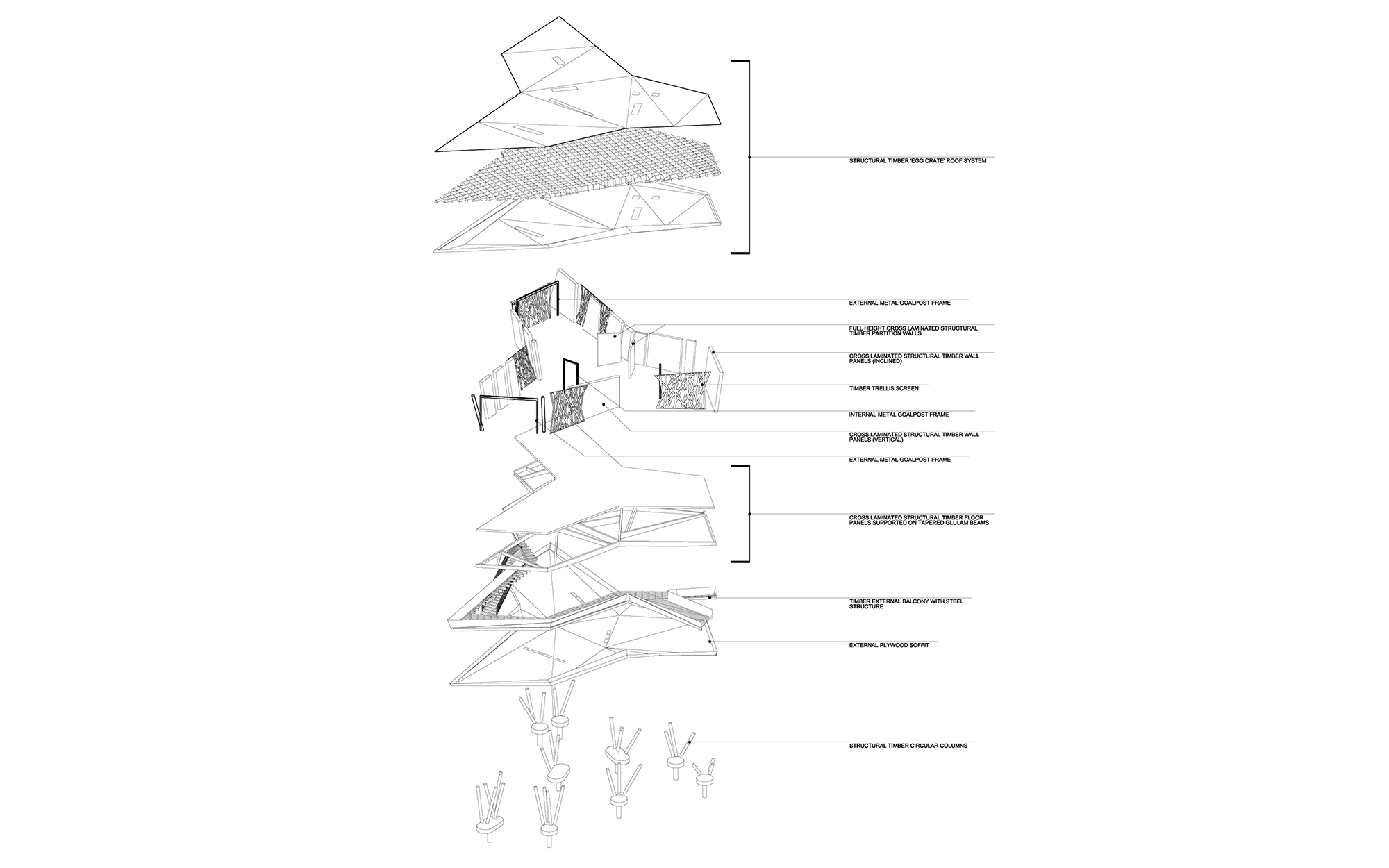
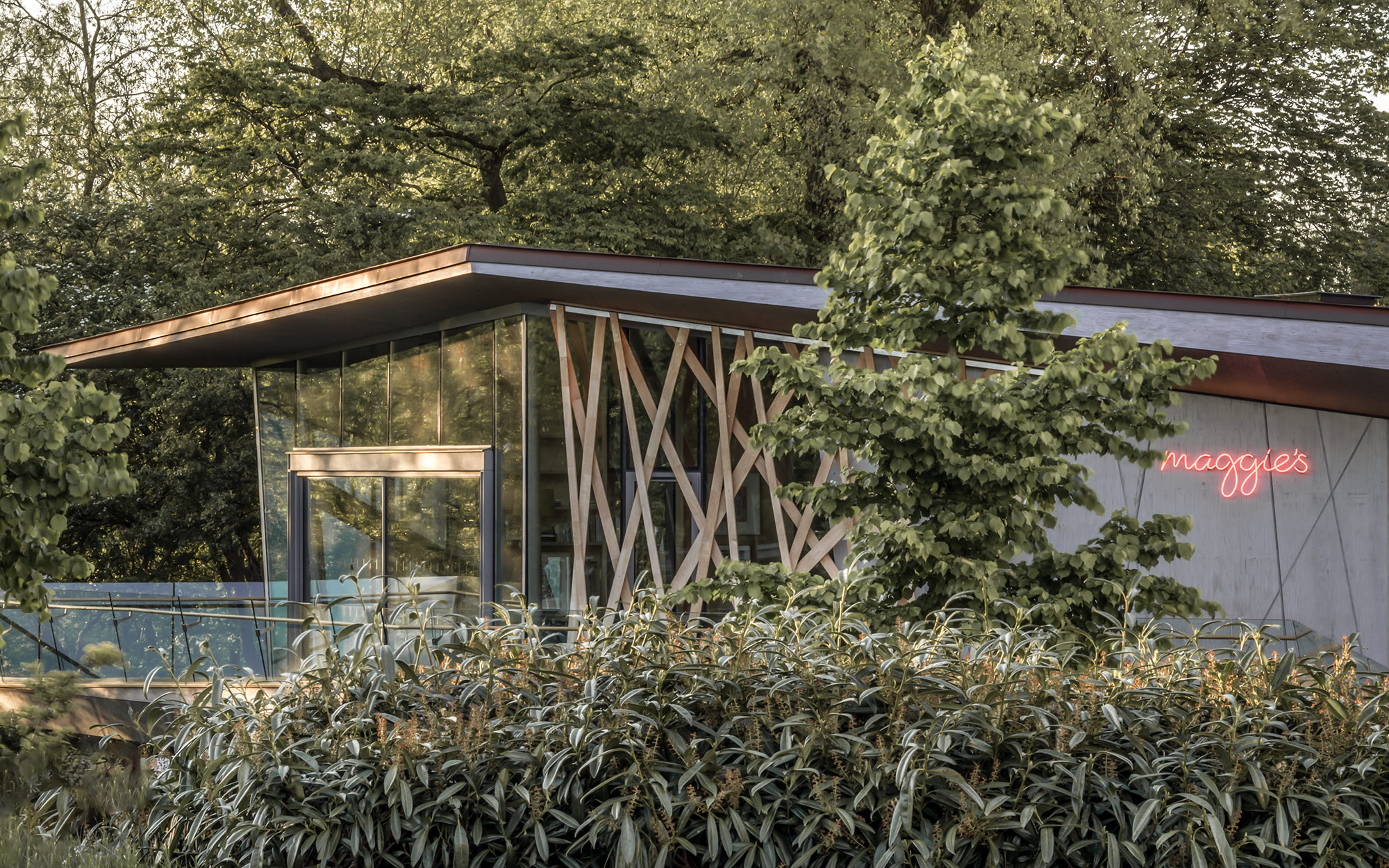
Raising the building allowed it to sit lightly within the trees with direct access from the hospital site, while arranging the slender supporting columns in informal clusters emulated a thicket of tree trunks. This visual synergy with the woodland was complemented further by the roof, designed as a honeycomb timber structure that allowed it to rise and dip like the canopy. The overall effect settled the Centre into its context, working with the landscape to ensure the Centre had a ‘light touch’ in both environmental and visual terms.
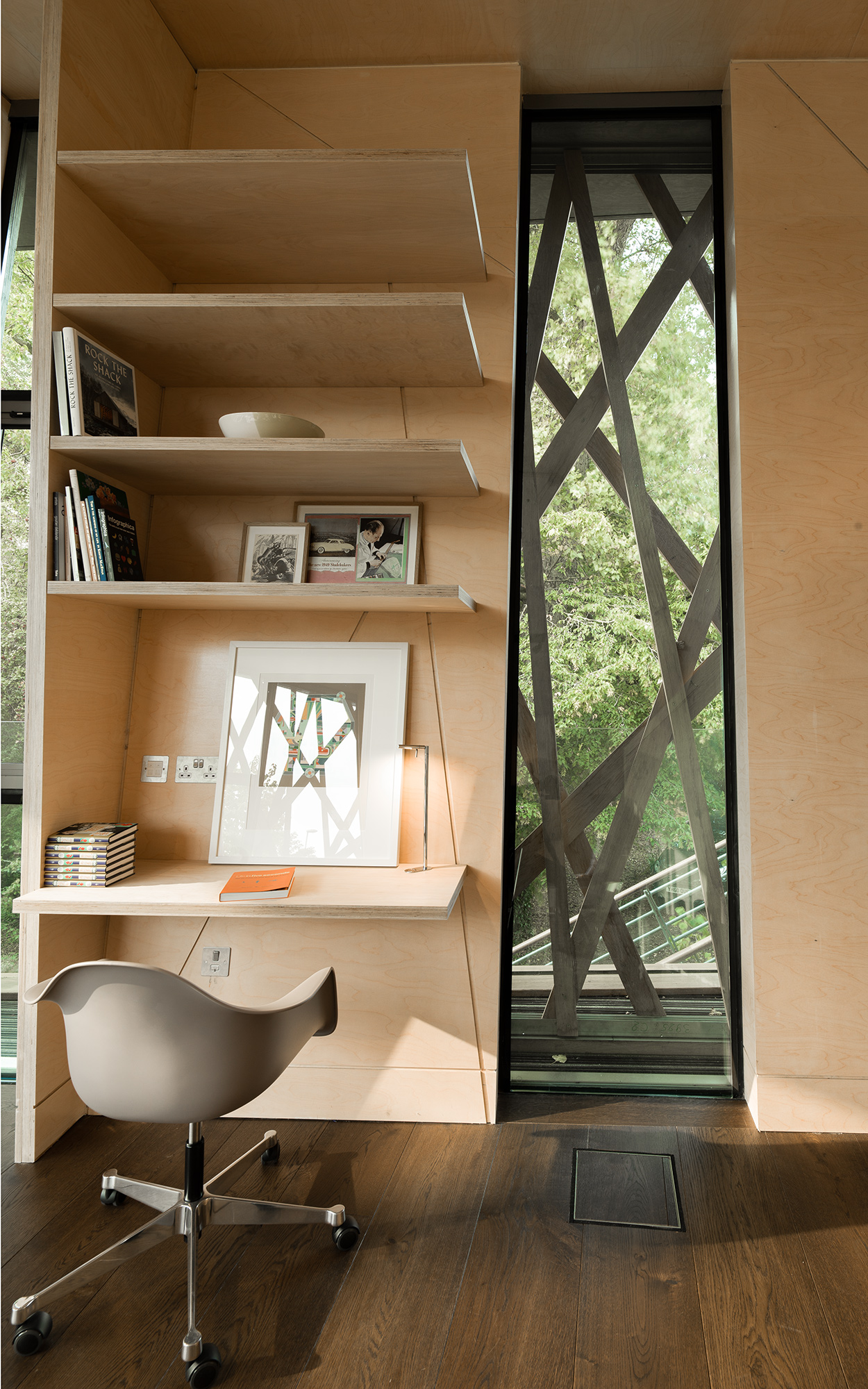
We designed the entire building using cross-laminated timber (CLT); for the columns, internal and external wall construction, and the slab and roof components. Prefabricated, self-supporting, and with a low embodied carbon value, the choice helped to integrate the building in its natural context and to create a warm, welcoming feeling for anyone visiting. As the panels were fabricated off-site and constructed quickly, without the need for wet trade materials, the amount of waste and damage produced during the construction process was also vastly reduced. Internally, the timber was left exposed, and the material was also used for the interior fittings and furnishings, delivering a calming, natural interior aesthetic that harmonises with its surroundings.
The Power of Home
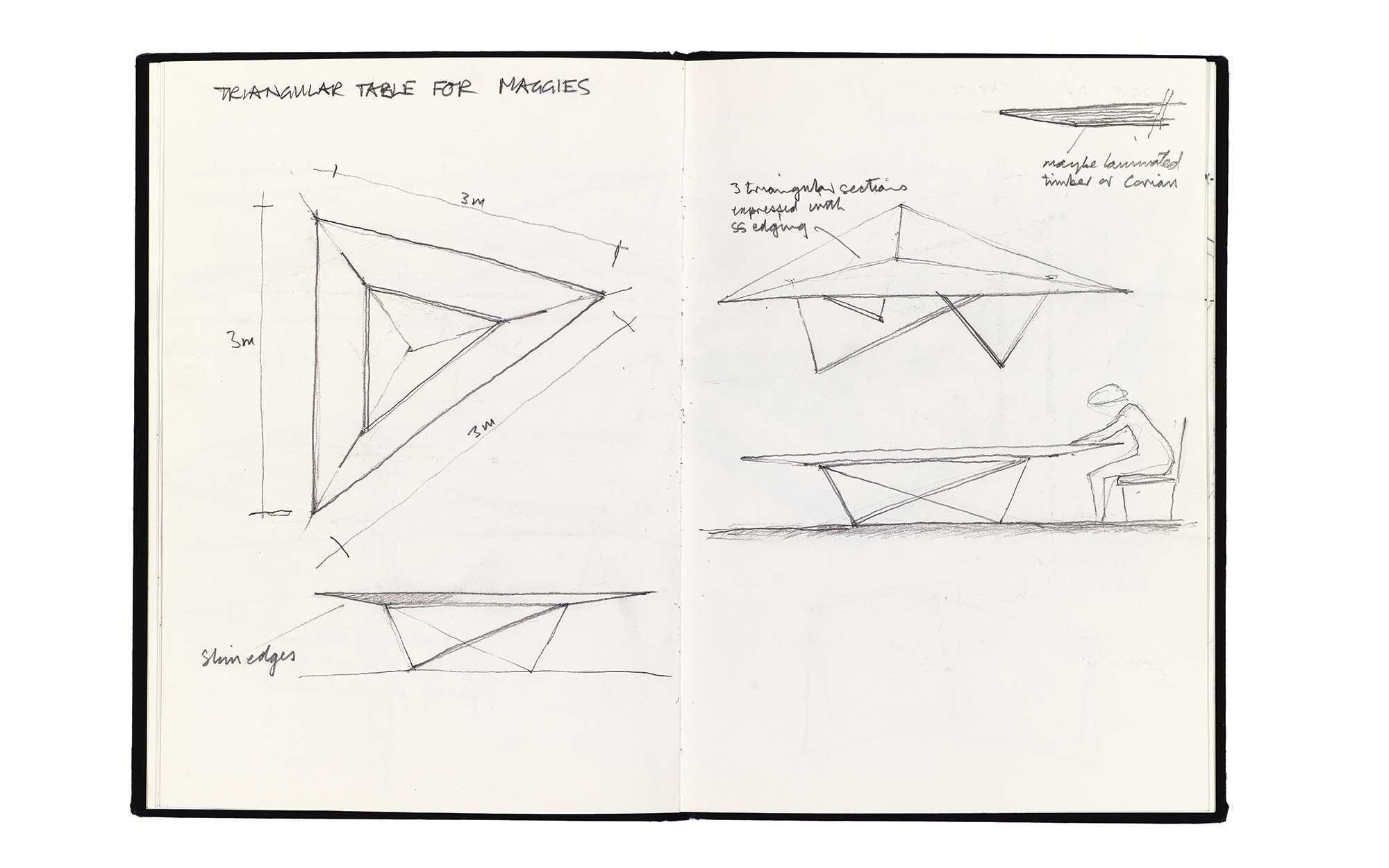
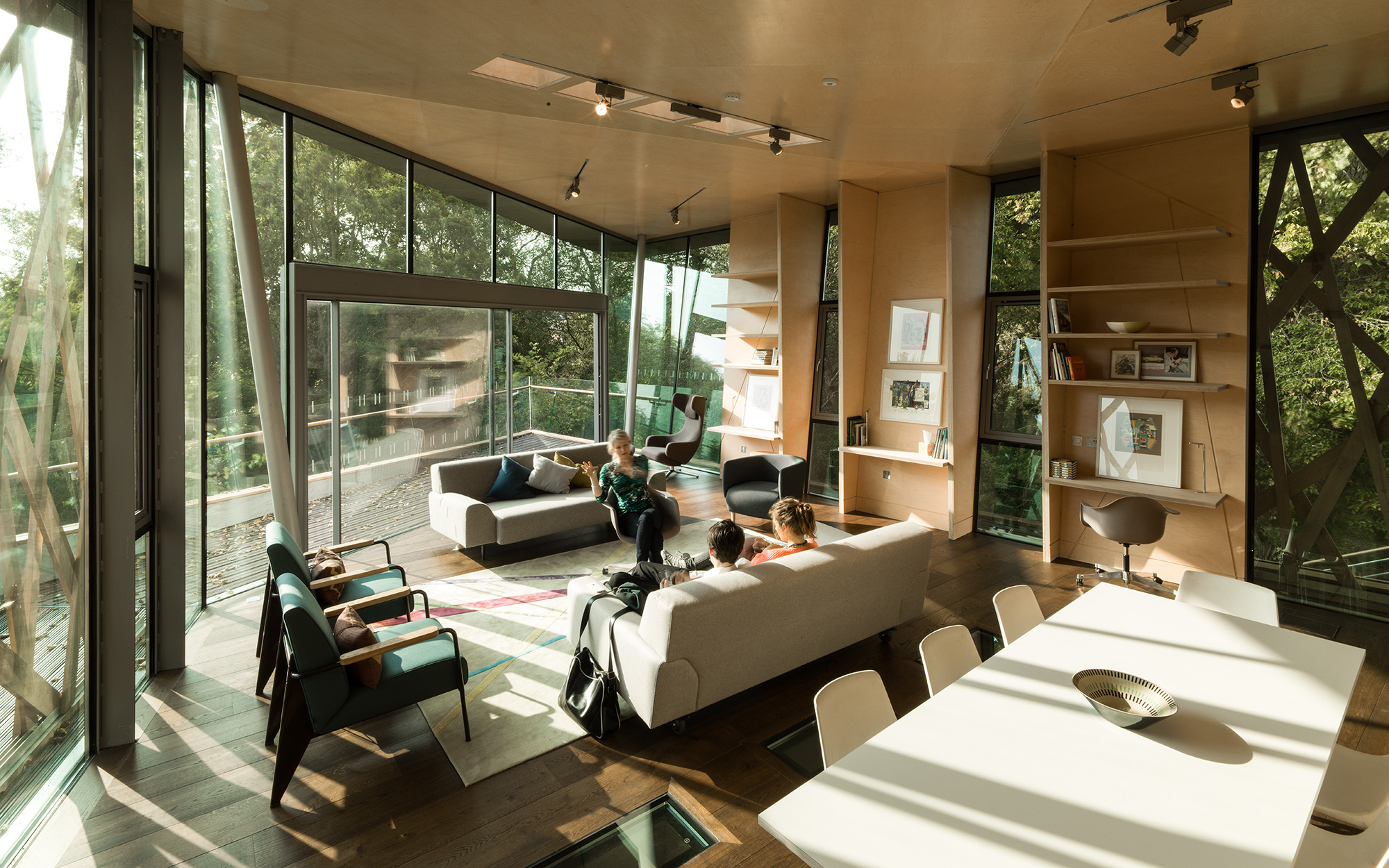
For the space itself, we sought a domestic-scale design that could emulate the warmth and ease of home. We equally wanted a sense of openness and movement to run throughout the building, avoiding enclosed rooms and feelings of confinement. This was largely achieved with a gently twisting geometry that allowed for separate areas to be established while minimising dividing partitions and walls. The areas are linked by a central ‘hearth’ that serves as a communal gathering space, an integral part of every Maggie's Centre, which anchors the space physically and socially and eliminates the need for corridors.
The dynamic angled roof design allowed for varied ceiling height, and an abundance of natural light was achieved by designing in numerous windows, clerestory glazing, and skylights. To tie the glazed facades back in with the landscape and protect those inside from UV radiation, we designed a set of inclined limber lattices to act as louvres, emulating the visual features of the surrounding tree branches. The terrace and outdoor seating area add to the available relaxation spaces, further enhancing the building’s relationship with its surroundings and maximising chances for connection to nature.
It was, and remains, an honour to have contributed to a Maggie’s Centre.
And on a more personal note, to have worked closely alongside Chris once again on a project that meant so much to us all. Projects of this nature test architecture in a different way, challenging our understanding of scale, material, light and landscape to create a setting that quietly supports its visitors.
Although Maggie’s commissions accomplished practices, the brief for a Centre is not to perform, but to provide. Maggie’s has consistently demonstrated that good architecture can uplift, restoring a sense of normality, dignity and even optimism at difficult moments.
I hope that the Oxford Centre has done just that.
‘Maggie’s Centres: Architecture that Cares’ is a free exhibition at the V&A Dundee from 6th March - 1st November 2026.
Design Development