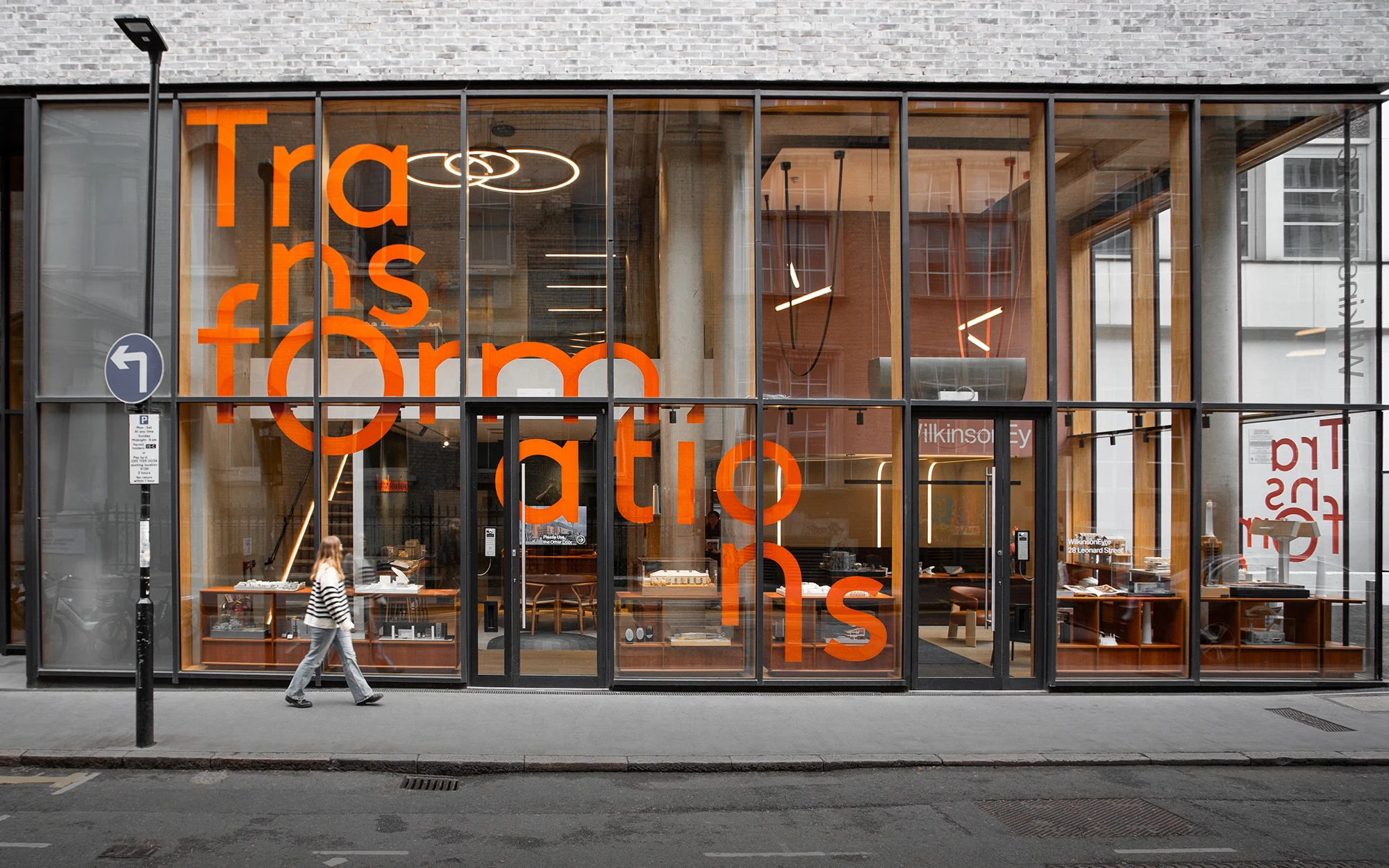
WilkinsonEyre brought together senior industry figures to discuss the barriers facing retrofit projects and how the industry must evolve to make retrofit 'stack up'.
For the first event in our ‘Transformations’ series (read more here), WilkinsonEyre hosted a roundtable discussion in its new Leonard Street office.
The discussion brought together Chris Beard (DP9), Bernard Duffy (Core Five) and Yasmin Al-Ani Spence and Sebastien Ricard (WilkinsonEyre) to discuss how retrofit can move from aspiration to viable delivery - and why “retrofit first” should not mean “retrofit only”.
As retrofit moves from niche practice to industry mainstream, the conversation is evolving. The question is no longer whether existing buildings should play a greater role in delivering sustainable cities, but how the industry can unlock their full potential.
As moderator Sebastien Ricard framed it, making retrofit “stack up” is not only about finance. It is also about quality, long-term value and understanding where transformation is the right response, recognising that every building, site and context requires its own approach.
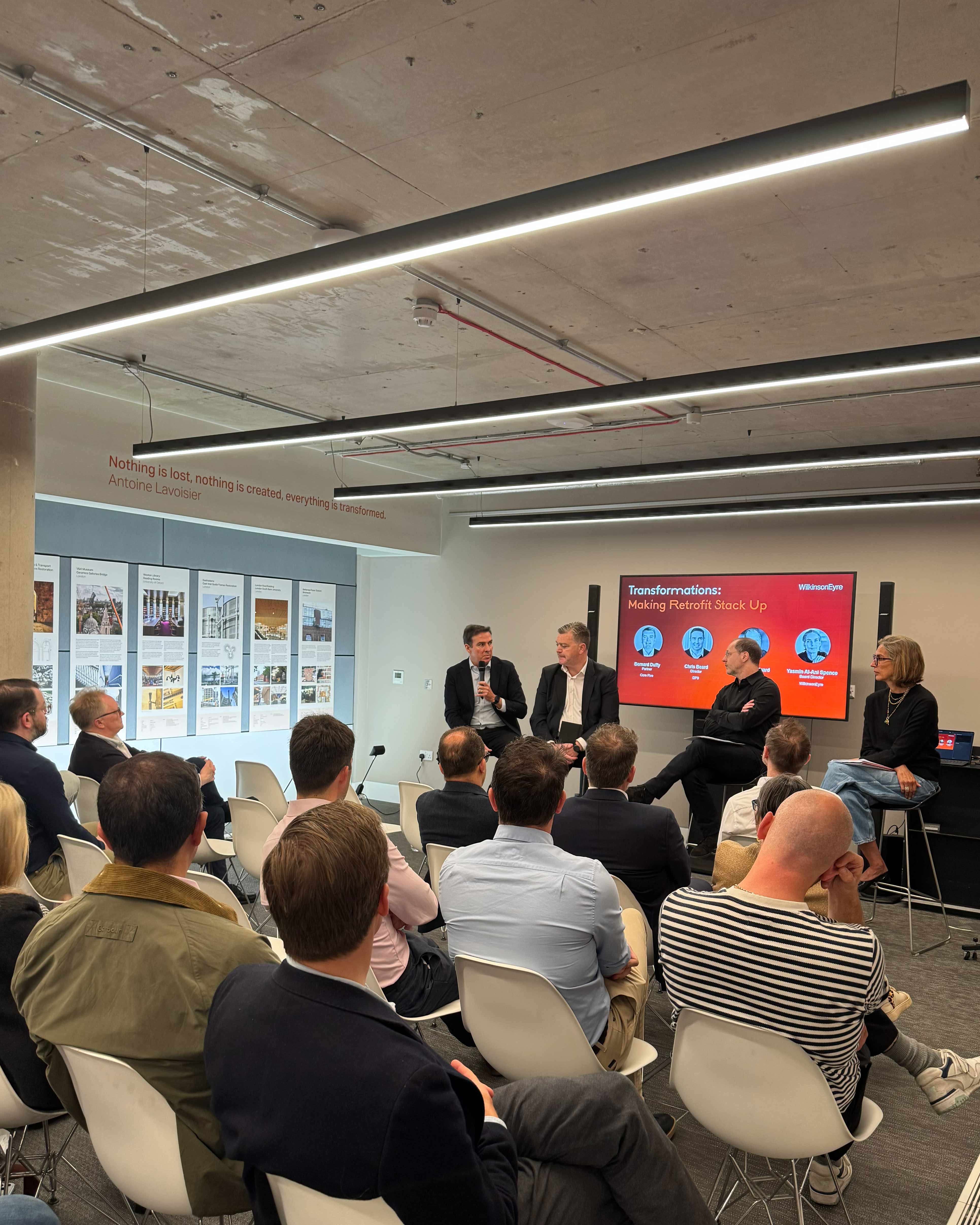
Retrofit first, not retrofit only
Chris Beard traced the shift in planning culture over the past decade. Reuse was once discussed largely through a conservation lens: listed buildings, conservation areas and heritage value. Since the climate emergency, however, the conversation has broadened. Central London boroughs are increasingly adopting retrofit-first policies, and reuse is now often the starting point for planning discussions.
But Beard stressed that this does not mean every building should automatically be retained. The challenge is to find the right balance on a site-by-site basis.
“Retrofit first” should not become “retrofit only”. For each project, the question must be whether reuse supports the wider planning objectives of the site, including carbon, viability, land use, intensification, public benefit and long-term value.
Complexity is not the same as lack of knowledge
Bernard Duffy challenged the idea that retrofit is slower because the industry lacks expertise. In his view, the London construction market has developed significant knowledge, particularly around complex existing assets. But complex retrofit remains a different proposition from new build.
Existing buildings are now being asked to do much more than they were designed for. Contractors must price in uncertainty, programme risk and the need to understand the asset before works begin. The assumption that “keeping more must mean doing less” is too simplistic.
As Duffy put it, the issue is not necessarily ignorance. It is risk, complexity and the fact that many delivery models still favour certainty.
Beyond carbon
A recurring theme was the need to avoid reducing the retrofit debate to a single metric.
Beard used the comparison of petrol and electric cars to illustrate the importance of whole-life thinking. The key, he argued, is not simply upfront embodied carbon or operational carbon in isolation, but the totality of the project over its design life.
This point was echoed throughout the discussion. A building that retains fabric but fails commercially, socially or functionally may not be the most sustainable outcome. Equally, a new-build scheme may carry a higher upfront carbon cost but provide long-term public benefit, density or adaptability.
The challenge is to assess carbon alongside design life, future flexibility, maintenance, public realm, affordability and the wider role of the site in the city.
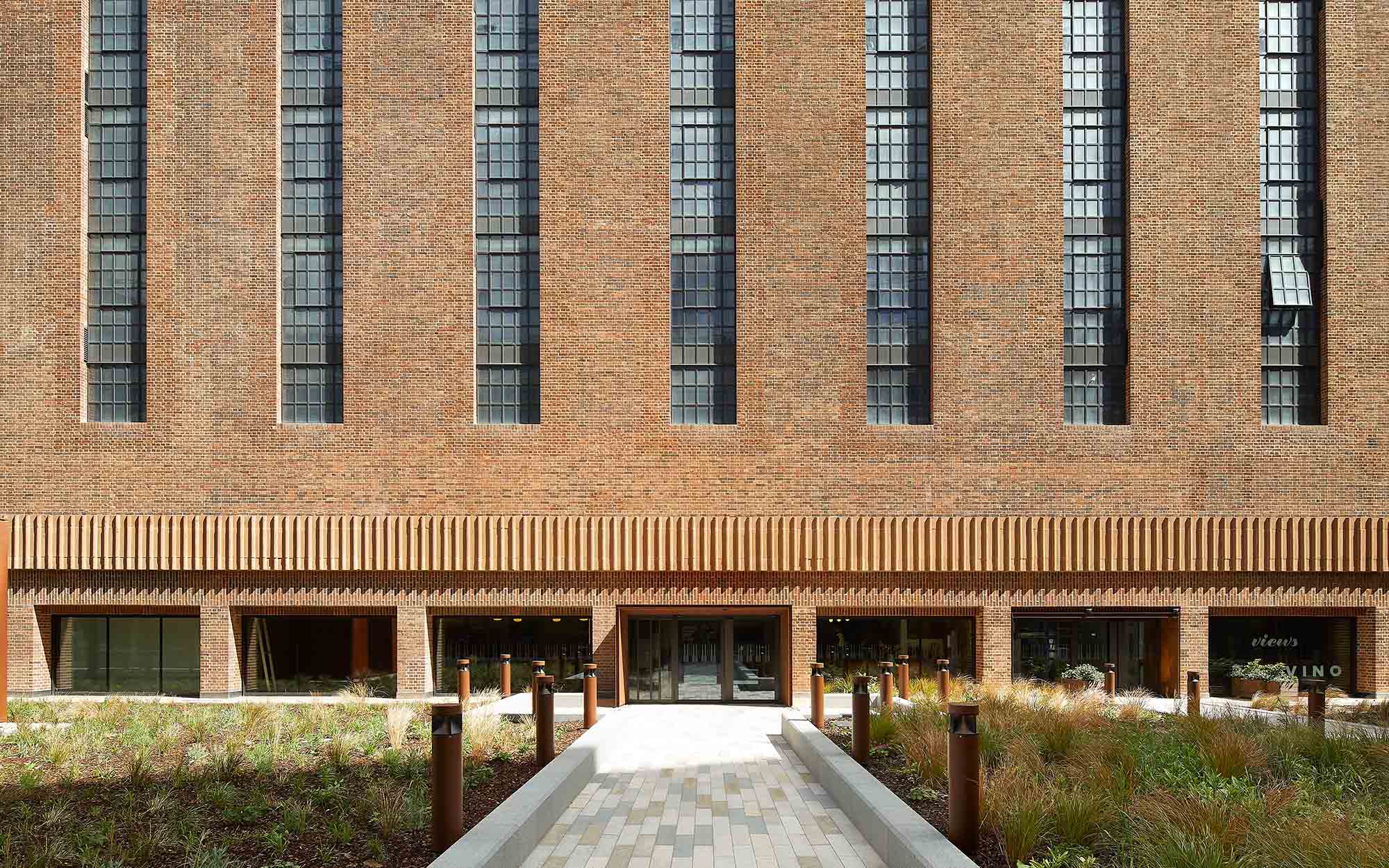
“We cannot be the society that throws everything away because we do not like it anymore”
Yasmin Al-Ani Spence argued that retrofit should be understood as part of a wider cultural shift. Other industries have normalised reuse, resale and repair; the built environment must do the same.
Drawing on WilkinsonEyre’s work on Citi, she rejected the idea that retrofit necessarily means accepting a lesser offer. Every project has constraints, whether it begins with an existing structure or a blank sheet of paper. The task is to use those constraints creatively.
She also argued that the industry must design new buildings with their future retrofit in mind. Buildings should not be conceived for a 25 or 30-year cycle, but as assets that may need to be adapted by future generations.
The missing infrastructure
The discussion also exposed a gap between ambition and delivery around material reuse.
Ricard questioned whether the industry is asking private developers to dismantle, store and reuse materials without providing the logistical systems to make that realistic. There is no equivalent of an “Amazon platform” for reusable building components, nor a mature network for storage, certification and redistribution.
Duffy agreed that circularity remains difficult in practice. Competing developers cannot be expected to collaborate naturally on stockpiling materials, and the carbon, cost and time involved in moving and storing components can undermine the original intention.
The group agreed that material reuse will require wider infrastructure, not just project-level goodwill.
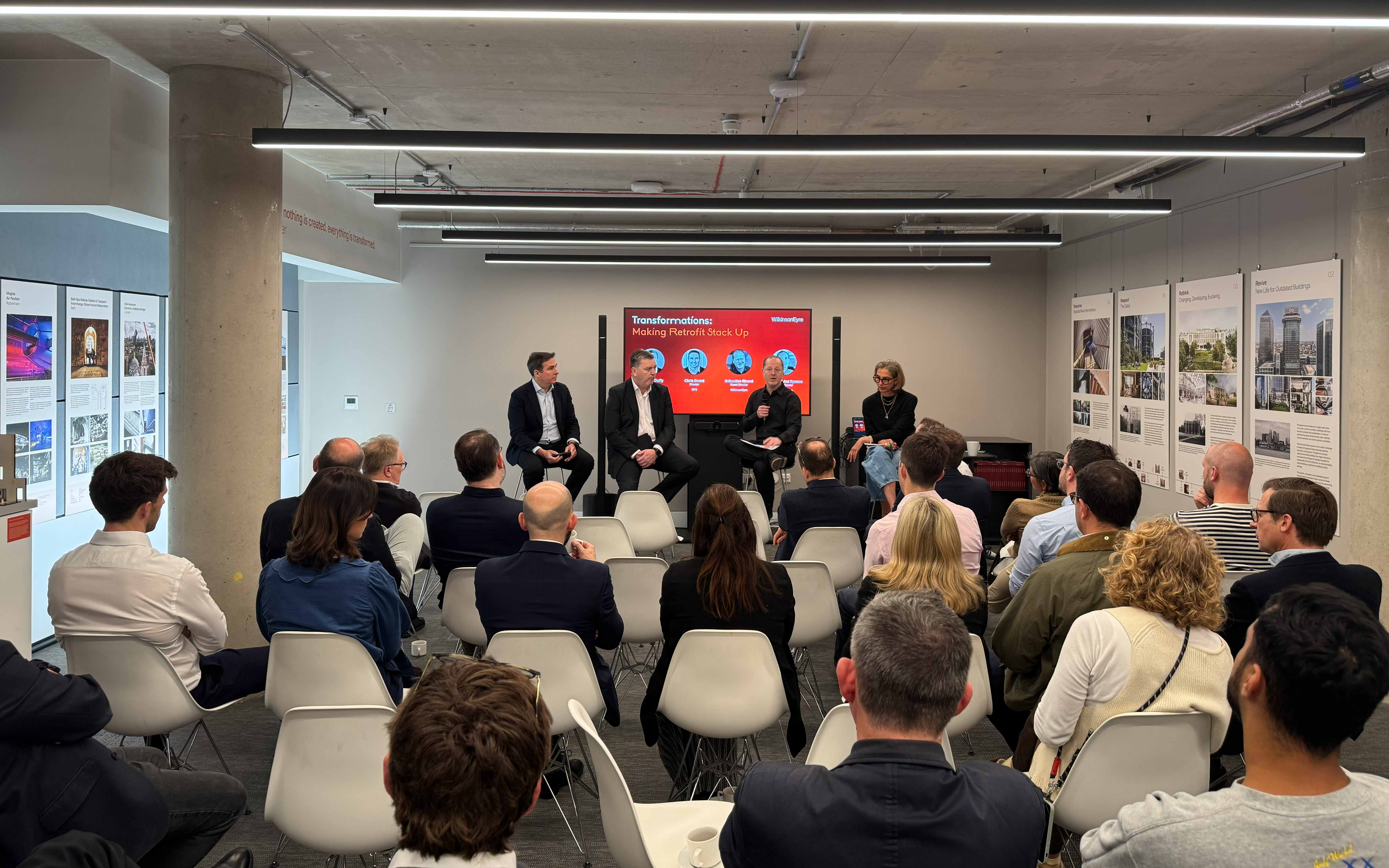
London’s value lies in flexibility
The panel also compared London with cities such as Paris and Vienna, where stricter urban frameworks often force reuse by default.
Ricard argued that London’s case-by-case planning culture is part of what gives the city its richness. Its character comes from negotiation, mixture and contrast: old churches next to towers, heritage buildings beside new development, and places that evolve through layers rather than fixed rules. Al-Ani Spence agreed that London’s flexibility should be valued. Reuse is not right for every building.
Some buildings, she suggested, are like a pair of jeans worn a thousand times: eventually, they can no longer be saved in a meaningful way.
The point is not to preserve everything, but to judge carefully what has value, what can be transformed and what may need to change.